Silicon steel is widely used in transformers, motors, generators, and other electrical equipment because of its specialized magnetic properties. However, processing this material requires considerably more control than conventional steel slitting. A silicon steel slitting line is designed to divide wide electrical steel coils into accurately sized narrow strips while minimizing burrs, scratches, width variation, coil deformation, and other defects that can affect downstream magnetic performance.
For manufacturers working with CRGO (grain-oriented electrical steel) and CRNGO (non-grain-oriented electrical steel), the slitting process is not simply a matter of cutting a coil into smaller widths. Knife positioning, strip tension, recoiling stability, edge condition, surface protection, and automation all influence the final quality of the slit coils.
Modern equipment therefore combines precision slitting technology with controlled strip handling and automated tooling systems. SUMIKURA, a coil-processing equipment manufacturer established in Japan in 1947, provides slitting lines for general metals as well as dedicated E-Steel applications, including CRGO and CRNGO electrical steel.
A silicon steel slitting line is a continuous coil-processing system that converts a wide master coil of electrical steel into multiple narrower strips. Unlike a cut-to-length line, which cuts material across its width to produce individual sheets, a slitting line makes longitudinal cuts along the coil direction.
The basic production sequence includes coil loading, uncoiling, tension control, precision slitting, strip separation, recoiling, scrap handling, and packaging. Each stage must work in coordination because electrical steel is typically thin and relatively sensitive to mechanical damage.
For E-Steel applications, SUMIKURA specifies lines capable of handling CRGO and CRNGO materials in approximately the 0.1–0.5 mm thickness range, with coil widths from 400 to 1,250 mm, coil weights up to 15 tons, and slitting speeds up to 300 m/min.
The main challenge is that electrical steel combines thin gauge, demanding dimensional requirements, and sensitive surface and edge characteristics. A small defect introduced during slitting can become a problem during subsequent lamination, stacking, winding, or core assembly.
Knife clearance and alignment are particularly important. If the upper and lower knives are not correctly positioned, excessive burrs, edge deformation, or uneven cutting forces can occur. Excessive mechanical pressure may also influence the strip edge or create unnecessary stress in the material.
Another challenge is strip stability. Thin silicon steel can be difficult to control when running at high speed. Variations in tension may lead to strip wandering, unstable winding, telescoping, or inconsistent coil tightness.
For this reason, a high-quality silicon steel slitting line needs to control the complete process rather than focusing only on the slitter head.
Production begins with positioning the master coil on the uncoiler. The coil must be securely supported and accurately centered before the strip is introduced into the processing line.
A stable uncoiling process helps prevent unnecessary strip movement and reduces the possibility of edge or surface damage during threading. For automated production environments, automatic coil handling and threading systems can further reduce setup time and operator intervention.
Tension control is one of the most important factors in electrical steel slitting.
Before reaching the slitter, the strip passes through a tension-control system that stabilizes its movement. Depending on the line configuration, tension can be controlled using felt plates, driven rolls, or belt bridle systems. SUMIKURA's E-Steel slitting line specifies a Belt Bridle tension unit, while its broader slitting-line platform supports felt plate, belt bridle, and roll-type tension systems.
For sensitive electrical steel surfaces, minimizing unnecessary contact and maintaining consistent tension can help reduce scratches and improve strip tracking.
The slitter head divides the master strip into multiple narrow strips according to the customer's required widths.
The key technical parameters include:
Incorrect knife settings can produce burrs, edge wave, width deviations, or other quality problems. High-pressure tooling locking and accurate knife positioning are therefore important for maintaining stable cutting conditions. SUMIKURA's slitting-line design incorporates double-slitter or turnstile configurations and high-precision tooling concepts for demanding coil-processing applications.
After slitting, individual strips must be separated and guided onto the recoiler. Separator discs or separator arbors maintain the spacing between strips and prevent them from overlapping during winding.
Recoiling tension must be carefully matched to the material and strip width. Too little tension can result in loose winding, while excessive tension can create unnecessary mechanical stress or affect coil geometry.
This is where back tension becomes particularly important.
Edge scrap and unwanted material must be removed without interrupting production. Efficient scrap handling reduces downtime and keeps the production area organized.
Once the required slit coils are completed, they can be banded, packed, labeled, and transferred to storage or shipment. Depending on production requirements, packaging and palletizing can be configured for manual, semi-automatic, or automatic operation.
Two important categories of electrical steel are CRGO and CRNGO.
CRGO, or Cold Rolled Grain-Oriented electrical steel, is primarily used where directional magnetic properties are important, particularly in transformer cores. Its processing requires careful control because the material's magnetic characteristics and surface condition are closely related to its manufacturing and handling history.
CRNGO, or Cold Rolled Non-Grain-Oriented electrical steel, provides more uniform magnetic properties in different directions and is commonly used for motor and generator laminations.
Because these materials serve different electrical applications, the slitting process may require different width combinations, tooling arrangements, tension settings, and downstream handling strategies.
SUMIKURA specifically identifies CRGO and CRNGO as materials for its E-Steel slitting solutions.
Edge quality directly influences downstream processing efficiency. Excessive burrs may interfere with stacking or assembly, while uneven edges can make narrow strips more difficult to handle.
For electrical steel, surface protection is equally important. Scratches, dents, or other surface damage can compromise the condition required for subsequent electrical applications.
The slitting head should therefore be treated as part of a complete quality-control system. Knife geometry, tool rigidity, material tension, strip alignment, separator positioning, and recoiling pressure all work together.
This is one reason modern E-Steel slitting lines increasingly use dedicated tension-control and automated tooling systems rather than relying entirely on manual adjustment.
Back tension controls the strip condition between the slitting section and recoiler. Its purpose is not simply to make the coil tighter; it also helps stabilize the narrow strips during high-speed processing.
Proper back tension can help reduce:
However, excessive tension is not automatically better. The correct setting depends on strip thickness, width, material characteristics, coil diameter, and production speed.
SUMIKURA's slitting-line platform lists back-tension equipment capable of operating at speeds up to 800 m/min, while the E-Steel slitting configuration has a rated slitting speed of up to 300 m/min.
Automation has become an important part of modern coil-processing equipment because electrical steel production often requires frequent changes in strip width and tooling configuration.
Manual knife and separator changes can consume considerable setup time and introduce variation between production runs. Automated tooling exchange systems can instead assist with slitter-head changes, separator-arbor configuration, knife cleaning, and related setup operations.
An advanced line can also connect production parameters with an upper-level IT system, allowing machine settings to be generated from production data. This improves repeatability and reduces dependence on manual calculations.
SUMIKURA's technology portfolio includes automatic slitter exchange systems and automated line setup, reflecting the broader shift toward intelligent and operator-friendly coil processing.
Automation also improves workplace ergonomics. Heavy coils and narrow slit strips can be difficult to handle manually, particularly in high-volume production. Reducing manual strip handling can therefore improve both production efficiency and operator safety.
The downstream application determines many of the requirements for silicon steel slitting.
Transformer manufacturing commonly uses CRGO because transformer cores benefit from directional magnetic characteristics. Slitting accuracy and edge quality are important for producing strips that can be processed into core components efficiently.
Motor manufacturing frequently uses CRNGO electrical steel. Narrow slit strips or subsequent laminations must maintain consistent dimensions to support efficient motor assembly and electromagnetic performance.
Generator manufacturing also relies on electrical steel for magnetic circuits. Stable strip dimensions and controlled edge conditions contribute to efficient downstream lamination processing.
Electrical steel is additionally becoming increasingly important in electric and hybrid vehicle motor production, where manufacturers are under pressure to improve motor efficiency while maintaining high-volume manufacturing productivity. SUMIKURA identifies automotive and electrical-equipment production among the application areas supported by its coil-processing technologies.
When selecting a silicon steel slitting line, buyers should look beyond the nominal line speed. The more important question is whether the complete system can consistently meet the required material, width, thickness, strip-count, edge-quality, and automation requirements.
Key evaluation points include:
Material compatibility: Confirm whether the line is designed for CRGO, CRNGO, or other electrical steel grades and whether coated or self-bonding materials need to be processed.
Thickness and width range: Match the equipment's working range with current production requirements as well as anticipated future orders.
Slitting accuracy: Evaluate knife positioning, tooling rigidity, clearance adjustment, and edge-quality control.
Tension system: For sensitive electrical steel, consider whether a belt bridle or other controlled tension technology can provide stable handling while protecting the surface.
Automation level: Automatic slitter exchange, automatic setup, threading, scrap removal, and packaging can significantly reduce changeover time and manual handling.
Recoiling performance: Separator control and back tension should be capable of producing stable, tightly wound slit coils.
Safety and maintenance: Easy tooling access, automated handling, and ergonomic maintenance design can reduce both production risks and long-term operating costs.
A silicon steel slitting line should ultimately be evaluated as an integrated production system, not as an individual cutting machine. The interaction between uncoiling, tension control, slitting, separation, back tension, recoiling, scrap removal, and automation determines the quality of the finished coil.
For manufacturers processing thin CRGO and CRNGO materials, the priorities are typically consistent strip width, clean edges, controlled tension, surface protection, stable recoiling, and high repeatability. SUMIKURA's experience in coil-processing equipment dates back to 1947, with its product range covering slitting, cut-to-length, blanking, and other coil-processing lines. Its E-Steel solutions specifically address precision processing of electrical steel.
As transformer, motor, generator, and EV-related manufacturing continues to demand higher material utilization and more consistent electrical performance, silicon steel slitting lines will remain an important part of the electrical steel processing chain. The combination of precision tooling, controlled tension, automated setup, and intelligent material handling provides manufacturers with a practical route toward higher productivity without sacrificing slit-coil quality.

Seus especialistas em linha de corte!
 Fábrica no Japão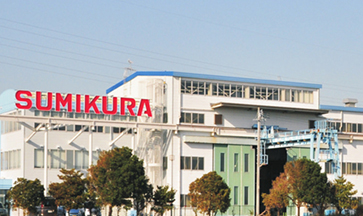
ENDEREÇO
487-3, Sanshincho, Chuoku, Hamamatsu, Shizuoka, Japão
 Mercado local de Japão:+81 53-425-5331
Fábrica na China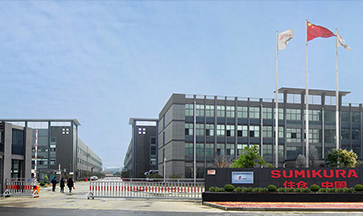
ENDEREÇO
265 Yixian Road, Deqing, Zhejiang, China
Mercado externo:+86 572-883-2016



