A Cut To Length Line (CTL Line) is an integrated coil processing system that converts steel, aluminum, and other metal coils into flat sheets with specified dimensions. Unlike a single cutting machine, a complete CTL line combines coil loading, uncoiling, leveling, feeding, length measurement, shearing, conveying, stacking, and automated control into one continuous production process. The quality of the final sheet depends not only on the shear itself, but also on how accurately each upstream and downstream component works together.
For manufacturers and metal service centers, understanding the main components of a Cut To Length Line is important when selecting equipment. Material thickness, coil weight, strip width, required sheet length, flatness tolerance, production speed, and stacking requirements all influence the configuration of the line. SUMIKURA's current CTL solutions are designed for materials including HSS, CRS, HRS, stainless steel, and aluminum, with configurations covering up to 2,500 mm in width, 12,000 mm in sheet length, 35 tons of coil weight, 0.2–9.0 mm material thickness, and line speeds up to 80 m/min.
A typical Cut To Length Line follows a logical material-flow sequence: coil loading → decoiling → leveling → feeding → length measurement → shearing → conveying → stacking. PLC-based automation coordinates these stations so that material tension, feeding speed, cutting position, and stacking timing remain synchronized.
The exact equipment arrangement varies according to the material and production target. For example, a line processing high-strength steel may require a more powerful leveling system, while aluminum processing places greater emphasis on surface protection during feeding, shearing, and stacking. SUMIKURA also lists different configurations including Six-Hi Leveler technology, five-flatten-roll leveling, mechanical stacking, and rotary shearing for aluminum applications.
The decoiler is the starting point of the CTL process. Its primary function is to support the incoming coil and release the strip at a controlled rate. A coil loading system positions the coil onto the decoiler, while the expanding mandrel or related clamping mechanism keeps the coil securely centered during operation.
Coil handling becomes particularly important when processing heavy material. SUMIKURA's larger CTL configuration is specified for coils up to 35 tons, meaning that the loading structure, decoiler, mandrel, drive system, and safety mechanisms must all be designed around the actual coil weight and dimensions.
A common engineering question is: How do you prevent coil misalignment during uncoiling? Accurate coil centering, controlled decoiler tension, and stable strip guidance are essential. Poor alignment at the beginning of the line can eventually affect leveling, feeding accuracy, cutting position, and stack quality.
The leveling machine is one of the most important components for final sheet quality. Metal coils naturally retain curvature and residual stresses from rolling and coiling. If these conditions are not corrected, the cut sheets may show coil set, edge wave, center buckle, or other flatness problems.
A modern leveler applies controlled bending through a series of rolls to redistribute residual stresses and produce flatter material. SUMIKURA's product range includes a 6-Hi Leveler, which uses work rolls supported by intermediate and backup rolls. This configuration is intended to provide controlled leveling performance when processing demanding materials such as high-strength steel and thin metal strip.
The key technical question is not simply “Can the leveler flatten the material?”, but “Can it achieve the required flatness without introducing new residual stress or surface marks?” Work-roll diameter, leveling force, roll gap, material yield strength, thickness, and strip tension all influence the result.
For flexible production, cassette-based leveling systems can also reduce changeover time when different material grades and thicknesses are processed. SUMIKURA states that its CTL solutions can use multiple leveling cassettes for hybrid steel and aluminum processing, with automated cassette exchange available in its configurations.
After leveling, the strip must be transported toward the cutting section at a controlled speed and position. Pinch rolls provide controlled feeding and help maintain stable material movement through the line.
Feeding accuracy directly affects sheet length accuracy. If the strip slips, accelerates unexpectedly, or experiences unstable tension, the actual cut length may differ from the programmed value. Therefore, the feeding system needs to work in synchronization with the measuring and shear-control systems.
For high-speed CTL production, the engineering challenge is to maintain accurate feeding while avoiding excessive surface pressure, vibration, or material deformation. This is especially relevant when processing thin aluminum or finished steel surfaces where marking must be minimized.
The length measuring system determines when the material has reached the programmed cutting position. Encoders and other measurement devices can monitor strip movement and provide feedback to the control system.
A modern CTL line therefore does more than simply set a cutting length on an operator panel. The control system must coordinate feeding speed, material position, shear timing, and production quantity. Operators may need to enter parameters such as material thickness, sheet length, production quantity, and processing speed before the line begins automatic production.
For manufacturers producing multiple sheet sizes, recipe management can also reduce setup time. Production parameters can be stored and recalled for repeat orders, helping improve consistency between production batches.
The shearing machine is the component that physically separates the continuous strip into individual sheets. The appropriate shear type depends heavily on material thickness, production speed, sheet dimensions, and required cutting quality.
SUMIKURA's CTL configurations include stop shear and rotary shear options. Its medium-width CTL configuration uses rotary shearing and is specified for material thicknesses of 0.4–4.0 mm and speeds of up to 80 m/min. Its broader automatic precision configuration covers 0.2–9.0 mm material and can be configured with stop or rotary shearing.
One important question is: What is the difference between stop shear and rotary shear? A stop shear temporarily stops or significantly changes the material movement during the cutting cycle, while a rotary shear can perform cutting while the strip continues moving. Continuous cutting can be advantageous for higher-throughput production because it reduces repeated acceleration and deceleration.
SUMIKURA also highlights rotary shear solutions for aluminum and other applications, as well as flying shear technology for continuous sheet processing. The actual shear selection should therefore be based on the material, thickness range, required production rate, and cut geometry rather than speed alone.
Once the sheet has been cut, it must be transferred from the shear to the stacking area without losing alignment. Conveyors, transfer mechanisms, side guides, and sheet positioning devices work together during this stage.
The transfer system needs to maintain sheet orientation and prevent scratches, edge damage, or collisions between sheets. This becomes particularly important when processing large sheets or materials with sensitive surface finishes.
The conveyor speed must also be synchronized with the cutting cycle. If the transfer speed is too slow, it can become a production bottleneck; if it is too fast, sheets may shift or collide during stacking.
The stacking system converts individual cut sheets into organized packages that can be removed and transported efficiently. Stacking accuracy is therefore an important part of the overall CTL line rather than a simple downstream handling function.
SUMIKURA's CTL solutions include mechanical stacking systems as well as magnetic or vacuum-based stacking options. The company describes multi-station stacking as a way to allow finished stacks to be evacuated while production continues, reducing unnecessary line stoppages. Magnetic systems can be applied to ferrous materials, while vacuum-based handling can be considered for non-ferrous materials such as aluminum.
The technical questions for a stacking system include: How much sheet weight can it handle? How accurately can it align the edges? Can it protect the sheet surface? Can finished stacks be removed without stopping the line? These factors can have a direct effect on production efficiency and finished-product quality.
The PLC is the control center that coordinates the different machines within the Cut To Length Line. Instead of each component operating independently, the PLC manages communication between drives, sensors, feeding equipment, leveling systems, shears, conveyors, and stackers.
The operator interface can be used to set production parameters and monitor operating conditions. More advanced systems can also support automatic setup, production data management, fault diagnostics, and communication with higher-level manufacturing systems.
SUMIKURA emphasizes automatic setup based on production data, automated roll and knife exchange, and integration of CTL equipment into more highly automated production environments. These functions are particularly useful for manufacturers handling multiple material grades and different sheet specifications.
The real value of a Cut To Length Line comes from the coordination between its components. The decoiler must release the coil smoothly; the leveler must achieve the required flatness; the feeding system must position the strip accurately; the measuring system must determine the correct cutting point; the shear must cut without compromising quality; and the conveyor and stacker must maintain the position and surface condition of every sheet.
A typical production sequence starts when the coil is loaded and centered on the decoiler. The strip is then uncoiled and guided through the leveling section, where coil set and other flatness problems are corrected. After leveling, pinch rolls feed the strip toward the shear while measurement devices track its position. When the programmed length is reached, the shear makes the cut. The finished sheet is then transferred to the stacking system, aligned, and accumulated into a finished package.
This integrated approach is particularly valuable when manufacturers need to process different materials and thicknesses without sacrificing production efficiency. SUMIKURA's CTL portfolio covers both medium-scale configurations, such as 150–800 mm widths and 300–2,000 mm lengths, and larger systems capable of processing widths up to 2,500 mm and sheet lengths up to 12,000 mm.
Choosing a Cut To Length Line should not be based only on maximum speed. The more important question is whether the complete system matches the customer's material and production requirements.
Key factors include material type, yield strength, thickness range, coil weight, maximum strip width, sheet length, flatness requirements, cutting tolerance, production volume, surface protection, stacking method, and automation level. For example, a line designed for high-strength steel may require a different leveling and shearing configuration from one optimized for aluminum. Likewise, a high-volume service center may benefit more from continuous rotary shearing and multi-station stacking than from a basic stop-cut configuration.
SUMIKURA Co., Ltd., founded in 1947 and headquartered in Hamamatsu, Japan, specializes in coil processing lines including Cut To Length Lines, blanking lines, oscillated shear lines, rotary shear systems, and slitting lines. The company also operates a manufacturing facility in Zhejiang, China, supporting its international coil-processing business.
For manufacturers evaluating a Cut To Length Line, understanding the relationship between each component is essential. The best-performing system is not simply the one with the fastest shear or largest decoiler; it is the complete line in which coil handling, leveling, feeding, measuring, cutting, transfer, stacking, and automation are engineered to work as one coordinated production system.

Seus especialistas em linha de corte!
 Fábrica no Japão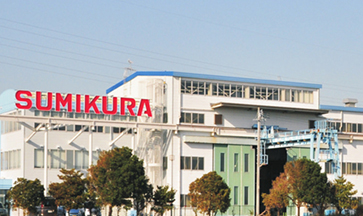
ENDEREÇO
487-3, Sanshincho, Chuoku, Hamamatsu, Shizuoka, Japão
 Mercado local de Japão:+81 53-425-5331
Fábrica na China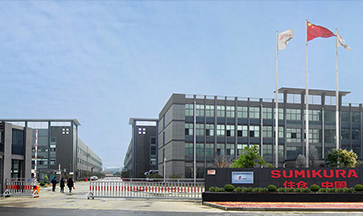
ENDEREÇO
265 Yixian Road, Deqing, Zhejiang, China
Mercado externo:+86 572-883-2016



