
For most of the 20th century, automotive stamping plants ran mild steel (typically 270–400 MPa yield strength) through their press lines. Leveling this material is comparatively forgiving: springback is modest, roll forces are moderate, and a well-maintained 4-Hi leveler can achieve the flatness tolerances that downstream presses and blanking tools demand. That era is closing fast.
Driven by crash-safety regulations and, more recently, by the structural demands of EV battery enclosures, body-in-white weight targets, and structural reinforcements, OEMs are specifying materials that sit in a completely different mechanical category:
Each step up this ladder comes with a corresponding jump in springback angle, leveling force requirement, and risk of roll deflection under load. Understanding the material science behind these changes is not academic — it directly determines whether your leveler can produce flat strip.
Battery electric vehicles carry a large, heavy battery pack that displaces structural volume. To compensate without adding curb weight, OEMs are downgauging body panels and reinforcement members — moving to thinner sheets of higher-strength grades. A 1.2 mm blank of 1500 MPa press-hardened steel (PHS) can replace a 2.0 mm mild steel part at 30–40% lower mass. The catch: that 1.2 mm PHS blank must first be leveled flat before it enters the press or laser blanking line. That is exactly where conventional levelers fail.
Springback is the elastic recovery that occurs when a deformed metal strip is released from the leveling rolls. All metals spring back to some degree. The severity depends on the ratio of yield strength to elastic modulus (E). For steel, E is essentially constant at approximately 210 GPa regardless of grade. Yield strength, however, varies by a factor of 6 or more across the grade spectrum.
The practical consequence: at 270 MPa mild steel, springback is small and easy to overcome with modest roll penetration. At 1500 MPa press-hardened steel, springback is roughly 5–6 times larger for the same sheet thickness and roll pitch — and the leveler must apply correspondingly greater reverse-bending forces to cancel it out.
There is a second complication specific to AHSS: yield-point elongation and the Bauschinger effect. When AHSS is bent in one direction and then reverse-bent (as it passes through alternating leveling rolls), the effective yield strength in the reverse direction is lower than the initial forward yield strength. This means the roll force calculation must account for asymmetric plasticity — a factor that simple 4-Hi leveler control systems are not calibrated for.
The result when operators try to compensate by cranking up roll penetration on a 4-Hi machine: the work rolls deflect under the added load, contact pressure becomes non-uniform across the strip width, and the edges and center of the strip receive different levels of plastic deformation. The strip exits with edge wave, center buckle, or a combination of both — defects that feed directly into scrap rates at the press or blanking line downstream.
The fundamental design challenge in any leveler is this: work rolls must be small in diameter (to achieve a tight bend radius and high plastic strain per pass) but large in diameter to resist deflection under high rolling forces. These two requirements are mutually contradictory in a 4-Hi configuration.
A 4-Hi leveler uses a single backup roll behind each work roll. The backup roll provides some additional stiffness, but its contact with the work roll is limited to the work roll's width. When leveling force increases beyond the structural capacity of the work roll itself, the work roll bows — and no amount of backup roll sizing in a 4-Hi can fully prevent it.
A 6 High Leveler adds a second tier of backup rolls — the inner backup rolls — between the work rolls and the outer backup rolls. These inner backup rolls sit directly behind the work rolls across the full sheet width and absorb the lateral component of the bending force that would otherwise cause mid-span deflection.
Because the inner backup rolls are sized to remain straight under full production load, the work rolls are mechanically forced to follow the same straight path. The contact footprint across the strip width stays uniform — even at the roll forces required to plastically yield 1000 MPa or 1500 MPa steel.
This architecture also enables the use of smaller-diameter work rolls. A smaller work roll diameter means a shorter bend radius, which means higher localized strain per pass. Higher strain per pass is exactly what is needed to plastically override the large elastic springback inherent in AHSS and UHSS. In a 4-Hi machine, you cannot use small work rolls precisely because they would deflect under the high forces required. The 6-Hi solves this contradiction.
To understand why 4-Hi machines fail, it helps to look at the leveling force calculation. The bending moment required to plastically yield a strip is proportional to yield strength × (thickness²) × (strip width). For a 1.5 mm thick, 1200 mm wide strip:
| Grade | Yield Strength | Relative Leveling Force | 4-Hi Feasibility | 6-Hi Feasibility |
|---|---|---|---|---|
| Mild CR | 270 MPa | 1.0× (baseline) | Suitable | Suitable |
| HSLA 550 | 550 MPa | 2.0× | Marginal | Suitable |
| DP 780 | 780 MPa | 2.9× | Not Suitable | Suitable |
| TRIP 980 | 980 MPa | 3.6× | Not Suitable | Suitable |
| AHSS Gen 3 | 1180 MPa | 4.4× | Not Suitable | Suitable |
| PHS / Hot Stamping | 1500 MPa | 5.6× | Not Suitable | Requires 6-Hi + optimized pitch |
The roll deflection problem becomes critical because beam deflection scales with the cube of the unsupported span length. Even a modest 10% increase in work roll diameter — adopted in a 4-Hi machine to add stiffness — reduces the achievable strain per pass significantly, making it harder to overcome springback. This is the self-defeating cycle that 4-Hi design cannot escape when handling AHSS.
The problem is compounded for wide strip. Automotive blanking lines commonly process material up to 1800 mm or even 2000 mm wide. The deflection force on a work roll grows with the square of the strip width in the roll configuration. For a 2000 mm wide strip at 1000 MPa, the bending forces acting on the work roll are so large that a conventionally sized 4-Hi work roll would deflect by several millimeters at mid-span — producing an hourglass-shaped contact zone rather than a flat line of contact. The result is overthinned center, underthinned edges, and a flatness deviation that downstream measuring systems immediately flag.
The backup roll system in a 6-Hi leveler does more than add structural stiffness — it redefines how leveling force is transmitted through the machine. Understanding the load path makes it clear why this configuration succeeds where 4-Hi cannot.
A further benefit of the 6-Hi architecture is roll crown control. Because the work roll bowing is eliminated, operators can apply deliberate crown profiles to the inner backup rolls to compensate for any residual strip crown (a common defect in hot-rolled AHSS coils). This level of flatness tuning is simply not achievable in a 4-Hi design where the work roll position under load is uncertain.
Press-hardened steel (PHS), also known as hot-stamping steel (22MnB5 or equivalent), is produced by austenitizing a blank or coil at approximately 900–950 °C and then rapidly quenching it in the press tool. The resulting microstructure is fully martensitic, giving tensile strength in the range of 1500–1800 MPa. This is the material used for A-pillars, B-pillars, roof rails, and tunnel reinforcements in modern crash safety structures.
Processing PHS before hot stamping (i.e., leveling the cold coil as delivered or after slitting) presents a unique challenge: the material has already undergone partial processing and may carry residual coil set, edge waviness from the slitting operation, and localized yield-point variations from the thermo-mechanical rolling process. All of these must be corrected before the blank enters the furnace and press — because any flatness deviation will telegraph through the hot stamping process and produce dimensional error in the hardened part.
SUMIKURA's 6-Hi leveler has been configured and validated for processing 22MnB5-type press-hardened steel coil at tensile strength up to 1500 MPa. The machine employs hardened work rolls with optimized diameter-to-pitch ratio, a dual-tier backup roll assembly, and high-tonnage hydraulic cylinders with closed-loop pressure control. Roll pitch and penetration depth are set based on the incoming material certificate (yield strength, thickness, and n-value) to achieve target flatness without over-stressing the work rolls or the strip edge. The system integrates with SUMIKURA's Cut To Length Lines and Blanking Lines to form a complete coil-to-blank processing solution.
A 6-Hi leveler does not operate in isolation. Its flatness output feeds directly into the precision of every downstream process — from edge trimming and cropping to high-speed blanking and vacuum stacking. SUMIKURA engineers lines as integrated systems, with the 6-Hi leveler as the flatness foundation.
For stampers running mixed-grade production — for example, processing both 270 MPa cold-rolled and 1180 MPa DP steel on the same line — the Cassette Exchange System is particularly valuable. The leveler roll cassette (work rolls and inner backup rolls as an integrated module) can be pre-set off-line and swapped rapidly, allowing the line to resume production without the extended downtime that single-roll replacement would require.
Similarly, SUMIKURA's Slitter Exchange System applies the same cassette philosophy to slitting operations — critical when slitting AHSS coils to narrower widths before leveling and blanking.

Seus especialistas em linha de corte!
 Fábrica no Japão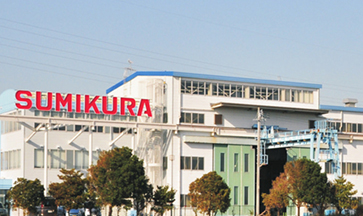
ENDEREÇO
487-3, Sanshincho, Chuoku, Hamamatsu, Shizuoka, Japão
 Mercado local de Japão:+81 53-425-5331
Fábrica na China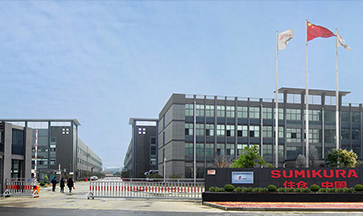
ENDEREÇO
265 Yixian Road, Deqing, Zhejiang, China
Mercado externo:+86 572-883-2016



