
A 6 High Leveler (commonly written as "6-Hi Leveler") is a precision metal strip-flattening machine that employs six rolls arranged in a specific staggered configuration — two small-diameter work rolls that contact the strip directly, two intermediate rolls that back the work rolls, and two large outer backup rolls that provide structural support. This architecture allows the machine to impose alternating plastic bending strains on coiled metal strip, progressively eliminating coil set, cross-bow, edge wave, center buckle, and other flatness defects that arise during rolling and coiling.
In the context of a cut-to-length line, the 6-Hi Leveler sits between the uncoiler/straightener section and the shear, acting as the quality gatekeeper: every sheet that leaves the line must pass through the leveler and meet flatness tolerances before it is cut and stacked. SUMIKURA Co., Ltd., with headquarters in Hamamatsu, Shizuoka, Japan, and a manufacturing base in Deqing, Zhejiang, China, has built its reputation as a global cutting line specialist precisely around this critical piece of equipment — the SUMIKURA 6-Hi Leveler.
The fundamental physics of leveling is controlled plastic deformation. When coiled metal is unwound, it retains a permanent curvature — "coil set" — as well as residual stresses that manifest as edge wave, center buckle, or cross-bow. A leveler corrects these by bending the strip past its elastic limit in alternating directions, so that the residual stresses balance and the strip emerges flat.
The bending radius imposed on the strip is directly proportional to the work roll diameter. Smaller work rolls create tighter bending radii, which are necessary to achieve plastic deformation across the full cross-section of thin or high-yield-strength materials. However, small rolls deflect under load — which is precisely why the 6-Hi configuration exists: the intermediate and backup rolls prevent work-roll deflection, maintaining a consistent nip gap across the full strip width regardless of load or material hardness.
The "intermesh" is the vertical overlap between upper and lower work rolls. A deeper intermesh creates more severe bending — appropriate for thick or stiff materials. Modern 6-Hi levelers use servo-controlled actuators at each roll end to set intermesh and tilt independently, enabling correction of asymmetric flatness defects such as one-sided edge wave. This control architecture is what differentiates a precision 6-Hi machine from a simple flattener.
On either side of the leveling roll cassette, driven pinch roll pairs grip the strip and maintain tension. This tension — carefully balanced to be below the material's yield point — keeps the strip stable during leveling and prevents whipping or misalignment at high feed speeds, which for SUMIKURA cut-to-length lines reaches 80 m/min.
The choice of leveler roll count is a fundamental design decision with real implications for flatness quality, operating cost, and material range. Below is a side-by-side comparison.
For producers handling a wide gauge range and high-strength grades, the 6-Hi configuration delivers measurably superior flatness (I-Unit values <5 IU achievable on AHSS) and substantially reduces downstream scrap caused by forming defects traced back to flatness non-conformance.
The automotive and structural steel industries have rapidly adopted Advanced High-Strength Steel (AHSS) grades — DP780, DP980, CP1000, and martensitic steels exceeding 1500 MPa — to reduce vehicle weight while maintaining crash performance. These materials present leveling challenges that simply cannot be addressed with conventional 4-Hi or 2-Hi equipment:
The higher the yield strength, the greater the elastic springback after each bending cycle. A material with 980 MPa yield strength springs back roughly 3–4× more than a 250 MPa mild steel for the same imposed radius. The 6-Hi leveler compensates through deeper intermesh, more leveling roll passes, and individually adjustable roll positions that can be programmed per material recipe in the control system.
Contact stress between work roll and AHSS strip can reach 2,000 MPa at the nip — exceeding the hardness of conventional tool steel rolls. SUMIKURA's 6-Hi Levelers use work rolls manufactured from high-chromium forged steel with deep induction hardening (HRC 60–65 surface hardness), combined with a precision-ground crown profile to maintain uniform contact pressure across the strip width.
Standard single-motor gearbox drives suffer from torque distribution losses between roll sets when processing wide, thick HSS strip — causing one work roll pair to effectively slip relative to another. SUMIKURA addresses this with an innovative electronic torque balancing system using multiple servo motors with real-time load sharing, improving leveling performance while reducing mechanical wear. This technology is especially critical for wide-format CTL lines handling strip up to 2,500 mm wide.
Engineering note: When leveling AHSS above 800 MPa, the required leveling force can reach 800–1,200 kN across a 1,500 mm strip width. The 6-Hi backup roll arrangement distributes this load across the full frame structure, preventing housing deflection that would otherwise appear as "shape error" in the finished sheet.
One of the most operationally significant features of modern 6-Hi levelers is the roll cassette design. Rather than replacing individual rolls one by one — a time-consuming and hazardous process — all six rolls are pre-assembled into a single rigid cassette frame that can be withdrawn laterally from the leveler housing and exchanged as a unit.
SUMIKURA's Cassette Exchange System enables a full roll cassette change in as little as 5 minutes — compared to 2–4 hours for traditional individual roll replacement. Critically, the spare cassette is prepared offline while the line runs, meaning production is interrupted only during the brief physical swap. For a line running at 80 m/min, even a 30-minute saving per exchange can represent thousands of tonnes of additional annual throughput.
Lines that process both steel and aluminium — or multiple thickness ranges within one product mix — can benefit from maintaining up to three different cassette sets, each optimized for a specific material and gauge band:
Automatic cassette selection can be triggered directly from the production order management system (MES/ERP), so the leveler self-configures without operator intervention when the coil schedule changes material type or thickness.
The 6-Hi Leveler does not operate in isolation — it is one station in a coordinated cut-to-length line where every component must be matched in speed, tension, and control architecture to deliver consistent output quality. SUMIKURA designs CTL lines as complete systems, not assemblies of independent machines.
The coil is loaded onto a motorized uncoiler that maintains back-tension on the strip. A belt bridle between the uncoiler and leveler entry smooths tension spikes when coil joints pass through, protecting the leveler rolls from shock loads that could cause surface marking.
The 6-Hi Leveler is the only station in the CTL line that actively improves flatness. All downstream stations — feeding, shearing, and stacking — are passive in this regard. This places the leveler at the centre of quality assurance, and is why SUMIKURA invests in advanced roll position sensors and closed-loop flatness feedback on premium lines, allowing the leveler to self-correct in real time as material properties change across a coil length.
After leveling, the strip enters the shear section. SUMIKURA's CTL lines offer two shear technologies:
Cut sheets must be stacked without surface damage — critical for automotive outer body panels where any scratch is a warranty claim. SUMIKURA offers both magnetic stackers (for steel) and vacuum stackers (for aluminium and coated surfaces). Multiple stacking stations allow continuous production while full stacks are removed — a key enabler for overall line efficiency.
The following specifications apply to SUMIKURA's CTL line range as listed on the official Cut-to-Length Lines product page. Leveler specifications are matched to line capacity.
| Parameter | Specification | Technical Significance |
|---|---|---|
| Material Types | HSS, CRS, HRS, SS, Aluminium | Full material breadth; same line handles advanced high-strength steel and non-ferrous with cassette swap. |
| Strip Width | Up to 2,500 mm | Covers wide-format automotive and construction sheet. Work roll length and backup roll diameter scale accordingly. |
| Material Thickness | 0.2 – 9.0 mm | 45× thickness range demands multiple cassette sets; the 6-Hi configuration is essential at both extremes. |
| Max Coil Weight | 35 Tonnes | Heavy-duty uncoiler mandrel and hydraulic clamping required. Inertia at full speed dictates drive sizing. |
| Sheet Length | Up to 12,000 mm | Long sheet capability for construction cladding and shipbuilding plates. |
| Line Speed | 0 – 80 m/min | Flying shear enables full-speed cutting; stop shear option for lower-volume orders. |
| Shear Types | Stop / Rotary | Rotary shear cuts on-the-fly; oscillated tool option allows trapezoid and angle cuts. |
| Cassette Exchange Time | ~5 minutes | Critical for mixed-material schedules; offline preparation means near-zero production impact. |
| Stacking Systems | Magnetic or Vacuum | Magnetic for steel; vacuum for aluminium and coated/sensitive surfaces. |
| Automation Level | Full (MES/ERP integration) | Auto setup from production data; no manual measurement required between orders. |
Note on compact CTL line variant: SUMIKURA also offers a compact CTL line with strip width 150–800 mm, thickness 0.4–4.0 mm, and 15-tonne coil weight — matched with a rotary shear for high-speed blanking of smaller-format sheets for appliance and electronics applications.
The automotive industry is the largest consumer of 6-Hi leveled sheet. Body outer panels (hoods, doors, fenders) require flatness within ±0.5 mm over 2,000 mm length — tolerances that only a precision cassette leveler can achieve on high-strength steel blanks. Stamping presses reject incorrectly flat blanks at a high rate, making upstream leveling quality directly traceable to press shop yield.
Washing machine side panels, refrigerator cabinets, and HVAC unit casings are formed from thinner gauge steel (0.5–1.5 mm) where edge wave and coil set cause roll-forming dimension errors. The combination of a 6-Hi leveler and edge cropper on the CTL line ensures both flatness and clean edge geometry before forming.
Roofing and cladding sheets up to 12,000 mm long benefit from CTL lines capable of heavy-gauge processing (4–9 mm). Flatness is less critical for structural sheet than for automotive, but accurate length and square cuts are paramount — delivered by SUMIKURA's flying shear and precision encoder-based length measurement.
Service centers operate the widest material mix of any customer type — potentially processing 50+ different grades, thicknesses, and widths per week. The cassette exchange system and multi-material capability of SUMIKURA's 6-Hi Leveler are specifically designed for this environment, enabling changeovers between orders in minutes rather than hours.

Seus especialistas em linha de corte!
 Fábrica no Japão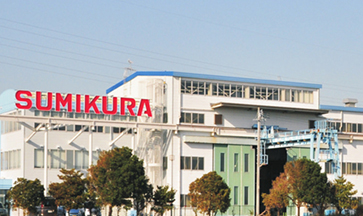
ENDEREÇO
487-3, Sanshincho, Chuoku, Hamamatsu, Shizuoka, Japão
 Mercado local de Japão:+81 53-425-5331
Fábrica na China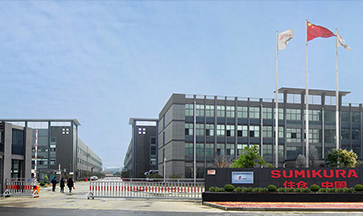
ENDEREÇO
265 Yixian Road, Deqing, Zhejiang, China
Mercado externo:+86 572-883-2016



